

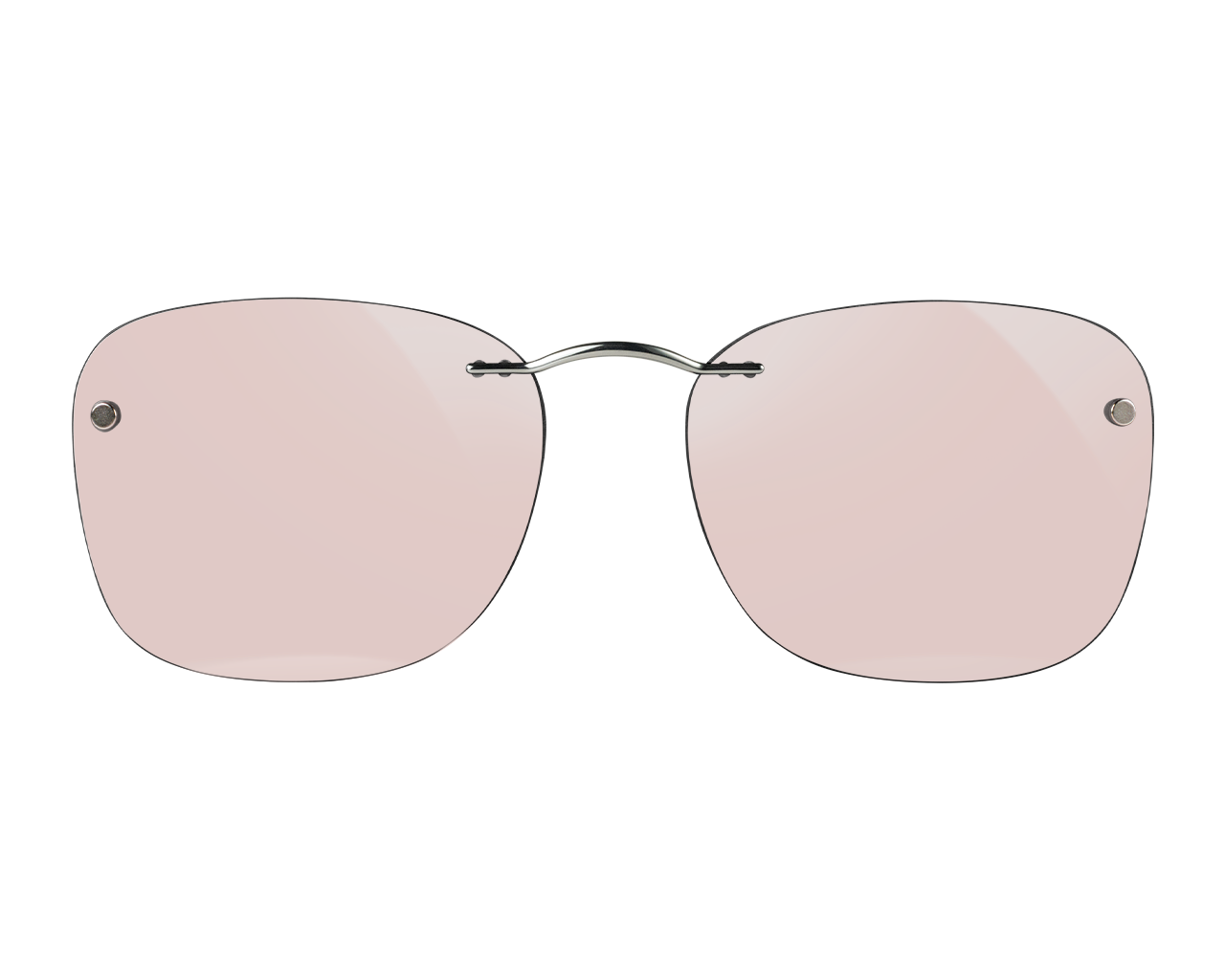


How Should Glasses Fit Your Face?
Glasses should sit level on your face, remain comfortably in place, and provide a clear view through the intended areas of the lenses. The bridge should not pinch or slide, the temples should rest comfortably without squeezing, and the frame should not touch your cheeks or eyelashes. A proper fit also creates a stable foundation for custom Chemistrie clip-ons.
How Should Glasses Fit?
Properly fitted glasses should feel secure without creating uncomfortable pressure. They should remain in the correct position during normal activities without requiring constant adjustment.
A good fit generally means:
-
The frame sits level rather than tilting to one side.
-
The bridge rests comfortably on the nose.
-
The glasses do not repeatedly slide down.
-
The nose pads do not pinch or leave deep marks.
-
The temples extend toward the ears without pressing into the sides of the head.
-
The temple tips rest comfortably behind the ears.
-
The frame does not move significantly when you look down.
-
Your eyelashes do not brush against the lenses.
-
The lower part of the frame does not rest on your cheeks.
-
Your eyes are positioned appropriately within the lens openings.
-
The lenses remain correctly aligned with your line of sight.
The correct fit is not determined by appearance alone. A frame can look like the right size while still placing pressure on the nose, sitting too far from the eyes, or positioning the lenses incorrectly.

An optician can evaluate the frame’s size, bridge, temples, lens position, and overall balance. Small adjustments can often make a noticeable difference in how glasses feel and perform throughout the day.
How Each Part of Your Glasses Should Fit
Several parts of the frame work together to keep glasses balanced. If one area is too tight, loose, wide, or narrow, another part may begin carrying more pressure than intended.
How Should the Bridge Fit on Your Nose?
The bridge is the part of the frame that rests across the nose. It helps support the weight of the glasses and keeps the lenses in the correct position.
A properly fitted bridge should make comfortable, even contact with the nose. It should not pinch the sides of the nose or leave a large gap that allows the frame to slide.
Frames with adjustable nose pads can often be fine-tuned by an optician. The pads should rest evenly against the nose rather than pressing at an angle or concentrating the frame’s weight on a small area.
Plastic frames commonly use a fixed bridge molded into the frame. Because this area may offer less adjustment than separate nose pads, selecting the correct bridge shape and width is especially important.
Signs that the bridge may not fit correctly include:
-
Frequent sliding
-
Deep or uncomfortable nose marks
-
One nose pad carrying more pressure than the other
-
The frame sitting noticeably too high or too low
-
A visible gap between the bridge and the nose
-
The glasses tilting to one side
Some light marking after wearing glasses for an extended period can occur. Persistent discomfort, soreness, or pronounced pressure marks should be evaluated by an eye care professional.
How Should the Temples Fit?
The temples are the arms that extend from the front of the frame toward the ears.
They should travel back comfortably without pressing firmly against the sides of the head. Pressure at the temples does not necessarily mean the glasses are secure. Frames that are too tight can create discomfort and may still slide forward.
The curved ends of the temples should rest comfortably behind the ears. They should provide enough support to keep the frame stable without digging into the skin.
The ZEISS guide to buying eyeglasses recommends that the temples be adjusted to the wearer’s face without creating pressure at the sides of the head. The support should come from a comfortable fit around the nose and behind the ears.
If one temple is positioned differently from the other, the glasses may appear crooked even when the front of the frame itself is not damaged. An optician can check the hinges, temple angles, and the way the frame rests on each ear.

Where Should Your Eyes Sit Within the Lenses?
Your eyes should appear appropriately positioned within the lens openings when the frame is sitting naturally.
They do not always need to be located in the exact geometric center of each lens. The correct position depends on the frame design, prescription, pupillary distance, fitting height, and type of lenses being used.
This becomes particularly important with bifocal and progressive lenses. These lenses contain different viewing areas, so their position must be measured based on how the frame actually sits on the wearer’s face.
If the glasses slide down after those measurements are taken, the wearer may no longer be looking through the intended parts of the lenses. That is one reason frame adjustment should be completed before final lens measurements and reviewed if the glasses begin fitting differently.
How Wide Should the Frames Be?
The overall frame width should be reasonably close to the width of your face.
Frames that are too narrow may press against the temples or bow outward at the sides. Frames that are too wide may slide, shift, or make the eyes appear poorly positioned within the lenses.
The frame should not rely on squeezing the sides of the head to remain in place. It should also not extend so far beyond the face that the temples angle sharply inward to reach the ears.
Oversized frames can still fit correctly when they are selected and adjusted for the wearer. The issue is not simply whether a frame is large. The bridge, lens position, frame width, and temples must still work together.
Should Glasses Touch Your Cheeks or Eyelashes?
The lenses should generally sit far enough from the eyes that the eyelashes do not brush against them during normal blinking.
The bottom of the frame should also avoid resting heavily on the cheeks. If smiling pushes the glasses upward, the frame may sit too low, be too deep for the available space, or require a different bridge fit.
Some frame shapes naturally sit closer to the cheeks than others. An optician can determine whether the issue can be corrected with an adjustment or whether another frame size or shape would fit better.
Signs Your Glasses Are Too Tight or Too Loose
A frame can become loose over time as hinges, screws, nose pads, and temples experience daily wear. Frames can also change shape after being dropped, stored improperly, or exposed to heat.
Your glasses may be too loose if:
-
They slide down repeatedly.
-
They move when you bend forward.
-
They sit lower than they did when first fitted.
-
One side drops lower than the other.
-
The temples no longer rest securely behind the ears.
-
You constantly push the bridge back into position.
-
The lenses no longer line up with your usual viewing position.
Your glasses may be too tight if:
-
The temples press into the sides of your head.
-
The temple tips cause soreness behind the ears.
-
The bridge or nose pads create uncomfortable pressure.
-
The frame leaves deep marks after short periods of wear.
-
The temples bow noticeably outward.
-
The frame feels difficult to remove.
-
You develop pressure around the points where the frame contacts your face.
Crooked glasses do not always mean the frame is the wrong size. Ears, facial features, and nose shape are not perfectly symmetrical. An optician can adjust the temples and nose pads so the frame appears level when worn.
Avoid bending the frame aggressively at home. Plastic and metal frames respond differently to adjustment, and some materials require controlled heat or specialized tools. Incorrect adjustments can damage the frame, lenses, hinges, or coatings.

Why Proper Frame Fit Matters for Your Lenses
Proper frame fit affects more than comfort. It also influences where the lenses sit in relation to your eyes.
Eyeglass lenses are produced using measurements that account for the wearer, frame, and prescription. These measurements may include pupillary distance, fitting height, lens position, and other details based on the lens design.
If the frame repeatedly slides or sits crooked, the lenses can move away from their intended position. This can be particularly noticeable with stronger prescriptions, bifocals, progressives, and other lenses with specific viewing areas.
A stable fit also helps keep the lenses at a consistent distance and angle. According to ZEISS information about individualized lenses, the relationship between the face and frame affects the position, angle, and height of the lenses.
If your vision feels different after the frame has been bent or loosened, the problem may not necessarily be a prescription change. The frame may need to be realigned. An eye care professional can determine whether the issue involves the frame, lenses, measurements, or prescription.
Why Frame Fit Matters for Chemistrie Clip-Ons
A properly fitted primary frame creates the foundation for a properly aligned custom clip-on.
Chemistrie Clips are custom-crafted for the exact frame shape, lens geometry, base curve, and magnetic attachment points of the glasses you already wear. The additional lens layer is made to follow the underlying lenses rather than using a standard shape designed for several unrelated frames.
Small magnets are installed near the outer areas of the primary lenses. Matching magnets in the custom clip-on guide it into position. As the clip-on approaches the glasses, the magnets complete the final alignment and create the magnetic click.
The custom clip-on can match the glasses precisely, but it cannot correct a primary frame that is already too loose, crooked, damaged, or poorly adjusted. If the underlying glasses slide down or tilt, the clip-on will move with them.
Before sending in eyewear for a custom clip-on, consider having the frame checked if:
-
It sits crooked.
-
It frequently slides.
-
The temples feel loose.
-
The nose pads are uneven or worn.
-
The frame has recently been bent or dropped.
-
The hinges do not open and close correctly.
-
The lenses appear loose inside the frame.
-
You are uncomfortable with how the glasses currently fit.
Once the primary frame is properly fitted, the custom clip-on can be produced around its intended position and geometry.
This frame-specific approach is one reason many people find that custom-fit clip-ons usually look better than universal clip-ons. The clip-on follows the curves, corners, and proportions of the actual glasses without requiring oversized lenses, hooks, or spring-loaded hardware.
Chemistrie works with virtually any frame, including many full-rim, semi-rimless, and rimless styles. Customers can often send in eyewear they already own for review and magnet installation.
The complete ordering process is explained in Can My Current Glasses Be Made Clip-Ready?.
When Should You Have Your Glasses Adjusted?
Have your glasses checked when they no longer sit the way they did after the original fitting.
An adjustment may be useful when:
-
The glasses consistently slide down.
-
The frame feels tighter than before.
-
One lens sits higher than the other.
-
The temples feel uneven.
-
The screws or hinges feel loose.
-
The nose pads have changed position.
-
Your eyelashes suddenly touch the lenses.
-
The frame was dropped, stepped on, or exposed to heat.
-
Your viewing position through progressive or bifocal lenses feels different.
-
A new clip-on appears correctly made but the primary glasses sit crooked.
Professional adjustments are usually preferable to trial-and-error bending. An optician can evaluate how the bridge, temples, hinges, nose pads, and front of the frame work together.
Frames also change naturally with use. Putting glasses on with one hand, wearing them on top of the head, or leaving them in a hot vehicle can gradually affect alignment. Using both hands to remove the frame and storing it in a protective case can help preserve its fit.
Frequently Asked Questions
How do I know if my glasses fit correctly?
Your glasses should sit level, remain comfortably in place, and provide a clear view through the intended areas of the lenses. They should not repeatedly slide, squeeze your temples, pinch your nose, touch your eyelashes, or rest heavily on your cheeks.
Should glasses leave marks on your nose?
Light temporary marks can occur after extended wear, but the frame should not cause deep marks, persistent redness, soreness, or uncomfortable pressure. An optician can adjust nose pads or evaluate whether the bridge is the correct size and shape.
Should glasses move when you look down?
Properly fitted glasses should remain reasonably stable during normal movement. If they regularly slide when you look down or bend forward, the bridge, temples, nose pads, hinges, or overall frame size may need attention.
Where should your eyes sit in glasses?
Your eyes should be positioned appropriately within the lens openings based on the frame, prescription, pupillary distance, and fitting measurements. They do not always need to sit in the exact geometric center, especially with progressive or other specialized lenses.
Will Chemistrie clip-ons fix glasses that are too loose?
No. A Chemistrie clip-on is custom-crafted for the underlying frame, but it does not correct a loose, crooked, or damaged frame. Have the glasses adjusted before ordering or contact Chemistrie if the frame’s fit changes after the clip-on is produced.
Start With a Frame That Fits Your Face
The best custom clip-on experience begins with glasses that sit comfortably and remain properly aligned. Once the frame fits the way it should, Chemistrie can create a custom magnetic clip-on that follows its exact lens shape and adds the function you need.
Explore Chemistrie clip-ons: https://chemistrie.com/collections/clips


